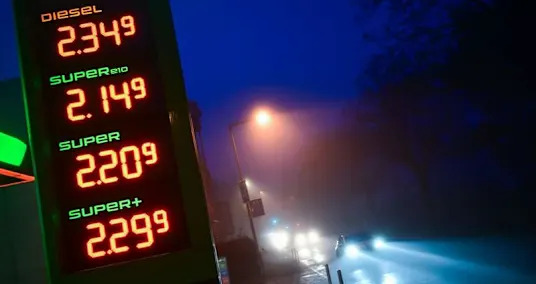
The head of the International Energy Agency (IEA), Fatih Birol, has warned of a "black April" due to the worsening situation for global oil supplies amid the war in Iran and the largely blocked Strait of Hormuz.
Birol told French newspaper Le Figaro in an interview published online late on Monday that while March had been very difficult, April would be much worse.
He said the states in The Gulf were producing only a little more than half the amount of oil they pumped before the war and that natural gas was no longer being exported at all through the crucial narrow waterway that has been effectively blockaded by Iran.
"If the strait really remains closed throughout April, we will lose twice as much crude oil and refined products as in March. We are facing a 'black April,'" Birol said.
"I am very pessimistic today because this war is paralysing one of the lifelines of the global economy. Not only oil and gas but also fertilizer, petrochemicals, helium and much more."
Most serious energy crisis in history
The world has never experienced a disruption to energy supplies on this scale, Birol said
"If you look at the three major oil and gas crises of the past, the current crisis is more serious than those of 1973, 1979 and 2022 combined. We are facing a major energy shock that combines an oil shock, a gas shock and a food shock," Birol said.
The IEA-driven release of oil reserves only eased the pain, Birol said. "The only real solution lies elsewhere: reopening the Strait of Hormuz. As long as it remains closed, the global economy will face enormous difficulties."
LATEST POSTS
- 1
 2023's Best 10 Cell phone Advancements You Can't Miss
- 2Vote In favor of Your #1 Method for diminishing Pressure
- 3Reporter's Notebook: The Post embeds with foreign armies visiting the IDF
- 44 injured in shooting at North Carolina tree lighting ceremony
- 5Don't miss Jupiter shining close to the waning gibbous moon on Dec. 7


- Why the Houthis waited until now to strike
- Ancient eggshells shed new light on crocodiles that hunted prey from trees
- Twins were the norm for our ancient primate ancestors − one baby at a time had evolutionary advantages
- ISS astronaut evacuation shouldn't interfere with upcoming Artemis 2 moon mission, NASA chief says
- Taylor Swift's 'The End of an Era' docuseries: Everything you need to know, plus how to watch for less
- Human evolution’s biggest mystery has started to unravel. How 2025 tipped the scales
- Get Cooking: 15 Speedy and Heavenly Recipes for Occupied Individuals
- Comet Lemmon and Milky Way spotted over Hawaii | Space photo of the day for Dec. 12, 2025
- German petrol stations hike prices as once-a-day rule takes effect