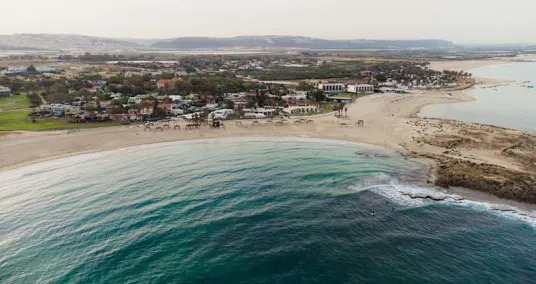
The discovery was made in an ancient shipwreck in the Dor Lagoon near the Carmel Coast, where archaeologists recovered nine pieces of unprocessed iron known as “blooms.”
Researchers from the University of Haifa said Wednesday that an underwater excavation off Israel’s northern Mediterranean coast uncovered what they described as the earliest known cargo of raw iron transported by ship, dating back around 2,600 years, Xinhua reported.
The discovery was made in an ancient shipwreck in the Dor Lagoon near the Carmel Coast, where archaeologists recovered nine pieces of unprocessed iron known as “blooms.” According to the university, the find provides direct evidence of how iron was transported in its earliest commercial stages.
The material was preserved in its original form, having solidified directly in a smelting furnace without undergoing forging or further refinement. Researchers said this distinguishes the cargo from later iron artifacts that typically show signs of shaping or tool-making.
Unlike copper and bronze, which could be melted into liquid form in ancient production processes, iron was heated with charcoal to produce a solid, porous mass. That mass was generally hammered to remove impurities and create denser material suitable for tools and implements.
The recovered blooms showed no indication of that secondary processing stage, suggesting they were transported immediately after production.

Earliest iron shipment discovered in ancient Mediterranean wreck
To determine the age and condition of the cargo, researchers conducted microscopic and chemical analyses.
Radiocarbon dating was also carried out on charred wood embedded in one of the pieces, helping confirm the timeline of the shipment. The findings were published in the journal Heritage Science.
Researchers said the cargo indicates that iron was being moved in raw form from production sites to other locations for further processing, pointing to a level of specialization in ancient manufacturing and trade networks in the Mediterranean.
The University of Haifa said the discovery provides new insight into early iron production and distribution practices in the region.
LATEST POSTS
- 1
 2024 Ferrari Roma With Just One Owner & 3,300 Miles For Sale At $...
 - 2The most effective method to Succeed in Your Web based Advertising Degree: Procedures for Progress
- 3Figure out How to Adjust Your Handshake to Various Societies
- 4How color-changing, bacteria-infused spacesuits could help keep future astronauts safe from space radiation
- 5The Incomparable Advanced cameras: Which One Will Win?



- Guns N' Roses 2026 Tour: How to get tickets, presale times, prices and more
- Vote in favor of the subject that you see as generally captivating and intelligent!
- Surveys of Thrillers That Re-imagined the Class
- I watched more than 500 new movies this year. These are the 25 best ones.
- 6 US States for Fly Fishing
- Kids may be more likely to get the new ‘Cicada’ variant of Covid-19, scientists say. Here’s what to know about BA.3.2
- How to get tickets to Jay-Z’s sold out Yankee Stadium shows
- As her kidneys fail and time runs short, this activist fights to decriminalize euthanasia in Mexico
- 'Wow!' The eye surgery marathon that restored sight for some South Africans